Step 1
Scenario Simulation
Generates thousands of financial scenarios covering interest rates, customer behaviour, and economic indicators.
We deliver AI-powered optimization models and software for Treasury and ALM, supporting financial institutions in meeting their strategic goals amid complex markets and regulatory requirements.
DeepBalance
Dynamic asset/liability allocation optimising performance while respecting institutional, market, and regulatory limits.
DeepBalance in Action
To our knowledge, DeepBalance is the first practical application of deep learning for balance sheet optimisation in Treasury and ALM. Our models, trained on thousands of scenarios, navigate complex regulatory and institutional constraints while bypassing limitations of traditional dynamic programming methods.
Financial professionals can rapidly analyse, test, and compute detailed optimisation strategies, while our self-learning algorithms automatically adapt to your institution’s requirements, determining optimal asset, liability, and capital allocations for multiple future scenarios while maintaining regulatory compliance.
Generates thousands of financial scenarios covering interest rates, customer behaviour, and economic indicators.
Our deep neural networks train rebalancing of your balance sheet on generated scenarios using backpropagation, optimizing for performance targets across possible futures while enforcing provided regulatory and strategic constraints.
Enter the economic forecasts of your institution into our trained neural network model to instantly receive respective optimal rebalancing action plans across multiple time steps
Balance Sheet in a negative rates environment.
To illustrate the power of DeepBalance and its operating principle, we use a simple, stylised EUR balance sheet assuming today is 29th of March 2016. At that time, European markets were in a negative interest rate regime, making asset/liability management particularly interesting.
Contact us to get the full case study and test your balance sheet!
Balance Sheet Rebalancing
The DeepBalance model has actively managed all portfolios:
Assets:
Liabilities:
Annualized Return on Equity (RoE)
Over the six-month period, the benchmark run-off strategy delivered a cumulative RoE of -0.73%, while DeepBalance achieved 6.21%.
News, references, materials ...
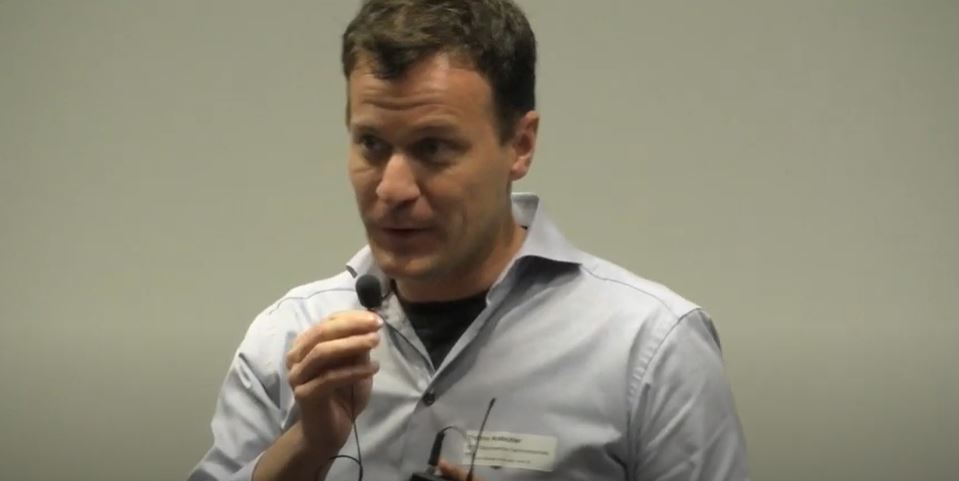
The Deep ALM research by Prof. Josef Teichmann and our Scientific Advisor Prof. Thomas Krabichler earned the Swiss Risk Award (2020), undescoring the work’s relevance for financial industry.
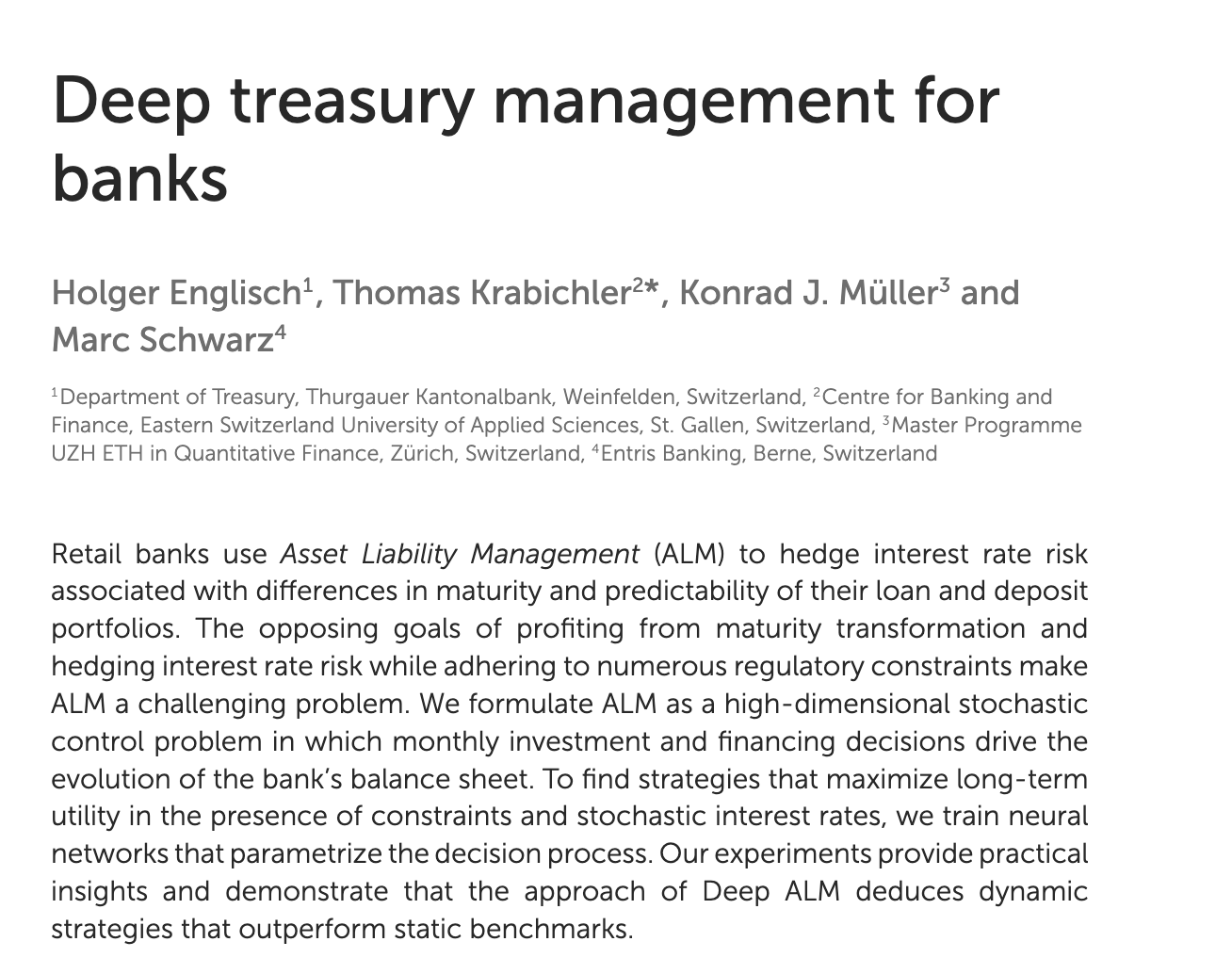
See the thorough discussion of the methodology behind DeepBalance in this research article co-authored by our scientific advisor Prof. Thomas Krabichler.

We received a financial grant (Innocheque) from the Swiss Innovation Agency (Innosuisse)!
Dr Mariusz Podsiadlo contributed to the Book 'Bank Treasury Management: A Practitioner's Guide to Hedging and Funding Strategy' by Dr. Beata Lubinska.
Experts in Finance and AI
Based in 🇨🇭 Switzerland, our Team unites deep expertise in quantitative finance, machine learning, and financial enterprise software to help financial institutions and their Treasury and ALM teams succeed in increasingly complex economic and regulatory environments.

Mariusz has over 25 years of experience in the financial software industry, having held leadership roles in software development, product management, risk management consulting, and sales at Reuters, Thomson Reuters, Misys, and Finastra. He holds a PhD in Computer Science from Warsaw University of Technology and is a CFA charterholder.

René brings over 25 years of experience accelerating growth for leading fintech companies, having held senior sales and business development roles at Misys, Deon Digital, Orange Business Services, and Odyssey Financial Technologies. His extensive network and deep understanding of the financial software industry, from established players to disruptive startups, enables him to craft and execute go-to-market strategies that deliver tangible results.

Matteo is a reinforcement learning expert with strong experience in both academic and industrial settings. Has researched portfolio optimization and derivatives hedging strategies using AI in collaboration with the investment bank of UBS, with work published in peer-reviewed journals and presented at international finance conferences.

Scientific Advisor
Thomas is Professor at OST Campus St. Gallen leading quantitative innovation projects at the Center for Banking & Finance. He gained a PhD in Mathematics from ETH Zürich and he possesses over 10 years of experience as a quant specialist at major investment banks across Europe. His research focuses on machine learning applications in finance, including Asset-Liability Management, derivatives pricing and hedging, and automated market making.
ALM is exciting!
Connect with our team to get the full case study and explore how DeepBalance can elevate your Treasury/ALM.